The European Union has launched an emergency fund for Africa to tackle the spiraling number of migrants flooding its shores -- as Europe faces its worst refugee crisis since World War II.
The
nearly $2 billion fund was unveiled at the end of a two-day summit of
EU and African leaders in Malta. The fund will support projects to
combat poverty, slow down migration and speed up repatriation programs.
This new money is in addition to the 20 billion euros annually donated
to Africa by the EU and its 28 states.
This is the sixth time that presidents and prime ministers of the European Union have tried to tackle the issue.
"We
are under no illusions that we can improve the situation overnight, but
we are committed to giving people alternatives to risking their lives,"
said European Council President Donald Tusk.
Tusk
listed five major goals to stem the tide of migrants: "The elements of
action plan are designed to, one, address the root causes of migration;
two, enhance cooperation on legal migration and mobility; three,
reinforce protection of displaced persons; four, prevent and fight
against migrant smuggling and trafficking in human beings; and five,
advance on returning persons that are not entitled to stay in Europe."
Maltese
Prime Minister Joseph Muscat said that while some may argue that the
fund was not enough, he stressed it was an important first step.
The
Mediterranean island nation of Malta is the smallest member of the
European Union. Located about 90 kilometers (56 miles) south of Sicily,
it has become one of the destinations for those fleeing Syria's bloody
civil war.
"I for one am a very vocal
critic of the fact that we maybe started acting a little bit too late
when too many lives were lost at sea... ," Muscat said, adding that he
hoped the summit "sowed the seeds of something that can be much more
long term."
European Council President
Tusk also confirmed plans for a summit with Turkey by the end of this
year, seen as the key to resolving the crisis.
18 die Wednesday off western coast of Turkey
Even
as Europe tries to forge a unified response to the crisis, tens of
thousands continue to embark on perilous journeys, desperate to escape
the repression, violence, poverty and insecurity in North Africa, West
Africa and the Middle East.
They come from more than 20 nations and with different motivations. Some are Syrians fleeing war. Others are Eritreans escaping repression or Somalis fleeing Al-Shabaab.
Many die in their attempt to find a safe haven.
On
Wednesday, hours before the EU meeting was scheduled to convene, at
least 18 people died off the western coast of Turkey in two boat
incidents.
Mountains of life jackets
piled up on the beaches of the Greek island of Lesbos offer a startling
testimony to the scale of the problem.
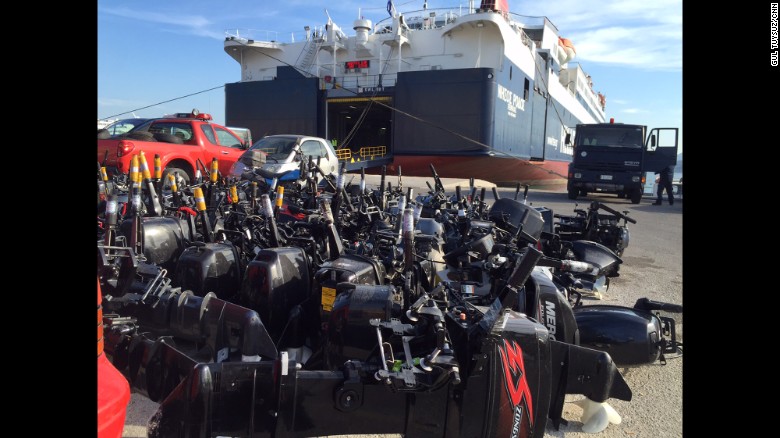
The
EU border agency Frontex, which tracks the movement of people, says
540,000 migrants arrived on Greek islands in the first 10 months of
2015. This figure is 13 times higher than in the same period of 2014.
Syrians
account for the largest number of arrivals, according to the Frontex
website. In recent weeks the share of Afghan nationals has risen
significantly.
Frontex has called for more than 250 officers to help screen, fingerprint and register migrants.
Sweden tightens border controls
Meanwhile, Sweden has joined the list of countries which have tightened border controls.
The
Ministry of Home Affairs said it will implement temporary border
controls for 10 days, that could be extended to 20 days at some point,
according to Fredrik Persson, a spokesman for the ministry.
Sweden's
Prime Minister Stefan Löfven defended the move, telling CNN: "This is
not closing the border, the decision we have taken is to reintroduce
internal border controls... if a person comes to our country seeking
asylum he or she will be given that opportunity."

No comments:
Post a Comment